
A Complete Guide to Packaging Lamination Technology - From P
Definition of Film Coating Process
A transparent film formed by bonding plastic film with printed materials.
Environmental friendliness: The combination of plastic film and paper will reduce the paper recycling rate (which can be verified by PTS testing). Some companies use oil coating technology instead of laminating, or use environmentally friendly film materials such as PLA and PBAT.
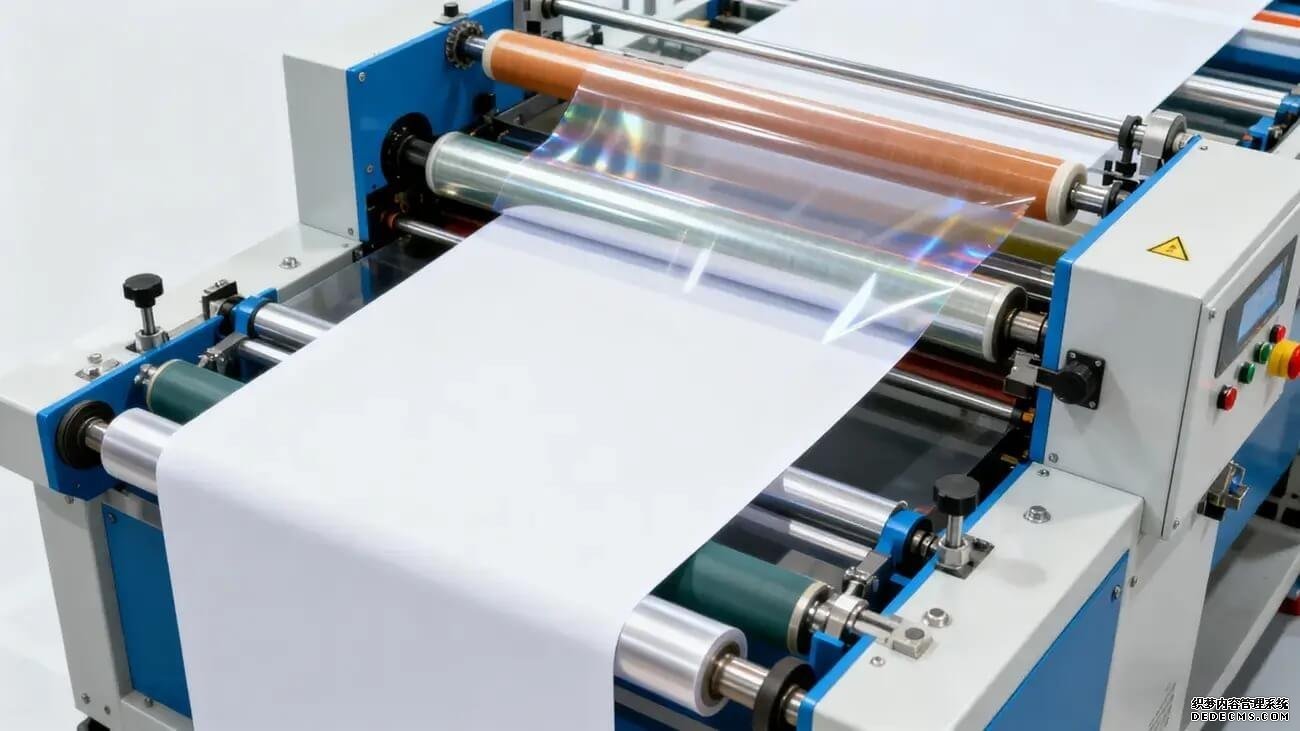
The function of film covering
Basic functions: prevent edge cracking, protect ink from scratches, waterproof and stain resistant, and extend the lifespan of paper products.
Visual and tactile upgrades: Enhance product added value.
Types of membranes
Bright film: high gloss, enhances color vividness, suitable for general printed materials that need to highlight colors.
Matte film: Low gloss, low-key texture and anti fingerprint, suitable for packaging that highlights quality and avoids fingerprint residue.
Touch film: imitates leather/fabric texture, requires high adhesion ink such as UV, and the process sequence is "printing/hot stamping first, then applying touch film"; Dark designs are prone to getting dirty, while light designs are safer
Pearlescent film: presenting a soft pearl like feeling, requiring the use of high coverage ink (to prevent the pearl base color from affecting the color), avoiding large areas of dark printing (easy to appear mottled), suitable for high-end gift packaging.
Laser film: Colorful reflective and highly anti-counterfeit, it needs to be laser molded before laminating/printing (to avoid high-temperature damage to the light pattern), and the hot stamping process needs to reserve a blank area in the laser layer.
Note: The above are common types, and the pattern of the film can be customized. Covering with film will cover the effect of special paper, while special paper will not be covered with film.
OPP film: economical and versatile, high transparency, but prone to electrostatic adsorption, suitable for low-cost, short-term use scenarios (such as promotional packaging), and should avoid high temperatures and long-term outdoor exposure environments.
PET film: high temperature resistance (150 ℃), tear resistance, food contact safety, suitable for high-strength scenarios such as fast food packaging, use with caution when budget is limited or high ductility is required.
PVC film: Soft and easy to bond, commonly used for shrink packaging and curved bonding (such as bottle labeling), but has poor environmental protection and needs to avoid high environmental requirements or direct contact with food.
The sequence of membrane and subsequent processes
Film coating before processing: suitable for local UV, embossing and other processes. If the process is processed before film coating, it will mask the characteristics of the process.
Processing before laminating: suitable for processes such as hot stamping, embossing, silk screen printing, etc., ensuring direct contact between the process and the paper (such as hot stamping before laminating to ensure adhesion)
Note: Actual operation needs to be adjusted according to process requirements, not in a fixed order.
Localized film covering
It can be achieved but has limited applications, usually replaced by methods such as film oil combination (such as matte effect).
Common problems and solutions
Bubbling: The cause is often uneven glue or residual dust, which can be improved by cleaning the surface and adjusting the amount of glue applied.
Delamination: If the adhesive viscosity is insufficient or the temperature is too low, the adhesive can be replaced or the pressing temperature can be increased.
Curling edge: The tension of the film is uneven, adjust the unwinding tension.