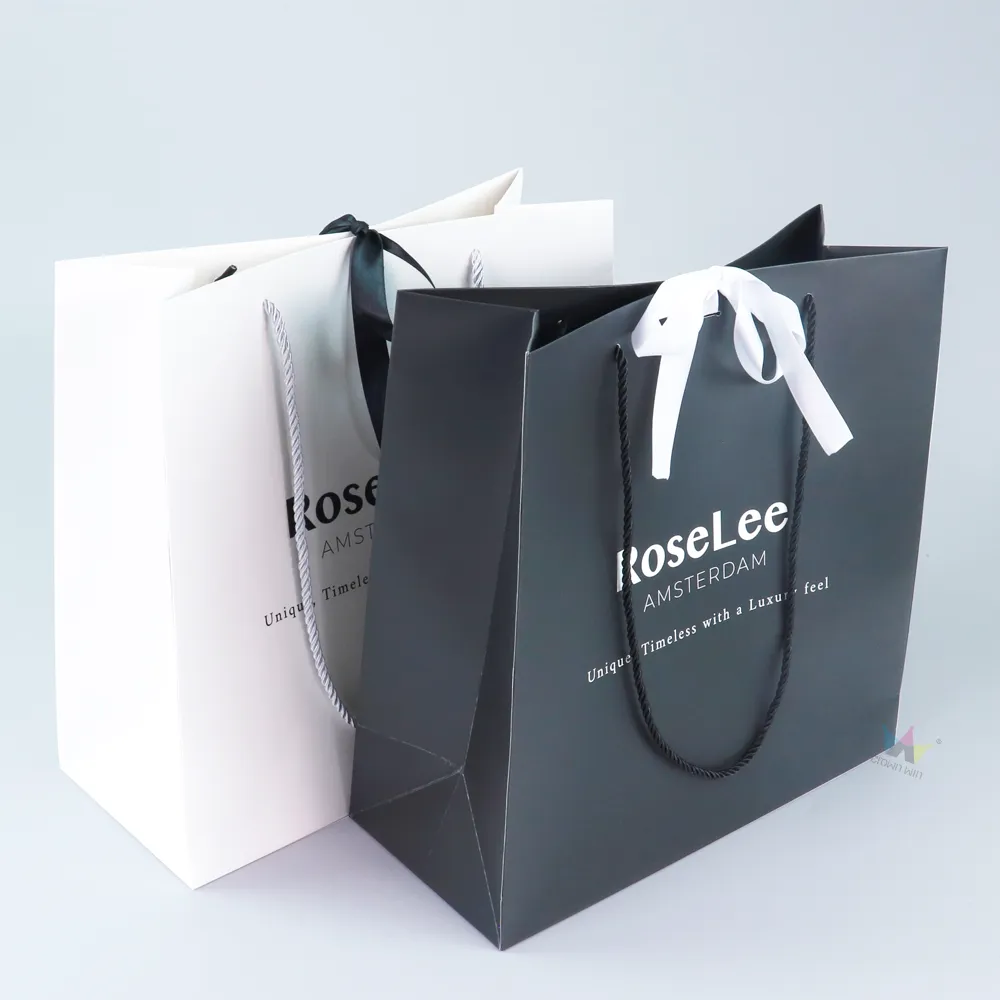
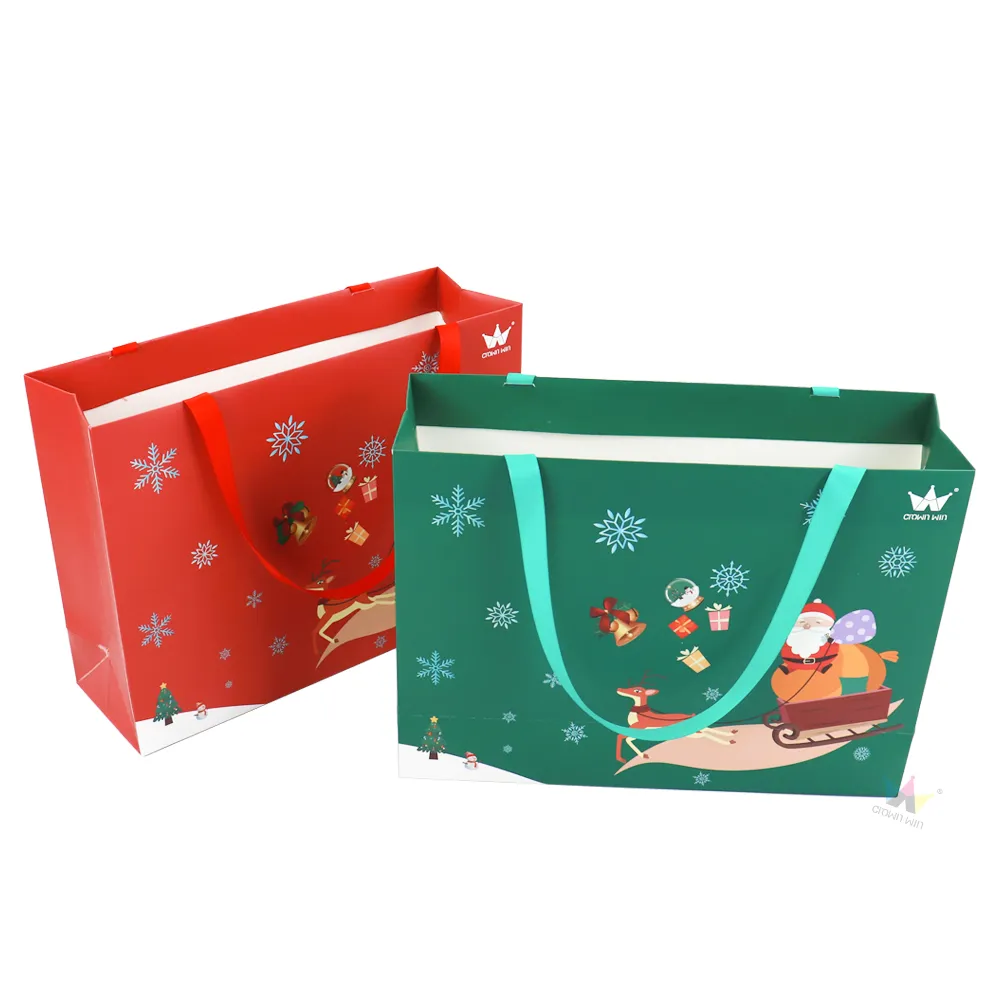
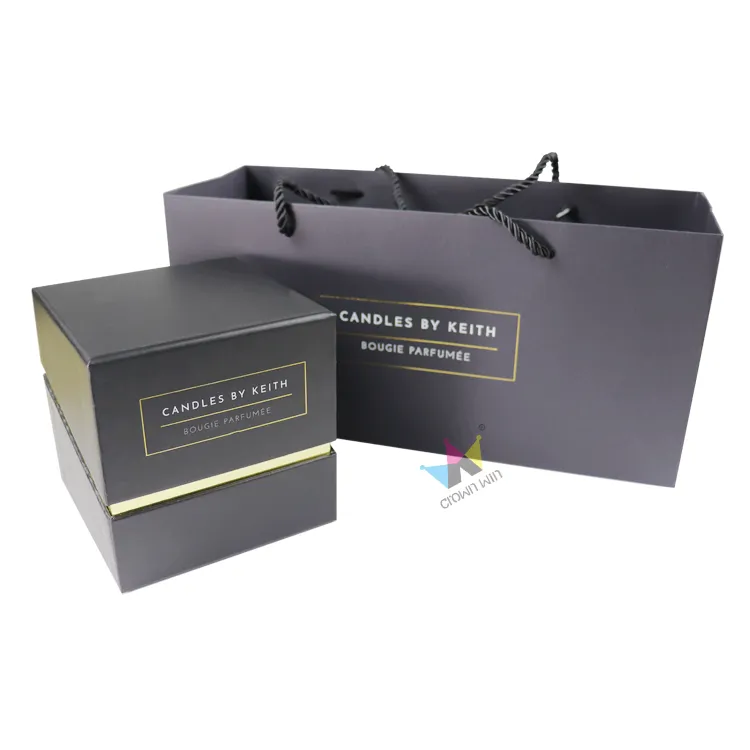
When customizing paper packaging for beauty, gift, and e-commerce products, most buyers prioritize stunning design renderings. While visually perfect renderings may seem to satisfy brand positioning and marketing needs, they can lead to unexpected production issues—such as impractical structural designs, deformation after assembly, non-compliance with export standards, increased production costs, or delayed delivery times.
Custom paper packaging renderings that lack professional engineering review serve merely as visual references; they are often unsuited for actual production and logistics environments. For cross-border exporters and brands, professional engineering review is the critical step in transforming beautiful designs into qualified, compliant, and mass-producible finished packaging.
Potential risks associated with unreviewed packaging renderings
Many packaging design failures stem from an over-reliance on aesthetically pleasing AI-generated renderings while ignoring the logic of actual production engineering. These hidden risks represent major pain points for B2B purchasers:
1. Manufacturing difficulties
In pursuit of visual impact, AI tools often incorporate complex structures, multi-layer overlays, and ultra-narrow margins into designs. Without engineering validation, these designs may prove impossible to execute using standard paper printing processes, leading to forced revisions, repeated prototyping, and wasted time.
2. Poor structural stability
Renderings only display 2D visuals and cannot simulate real-world conditions such as compression, stacking, and friction during logistics. Many slim or irregularly shaped box designs look premium in images but are prone to collapsing, scratching, or sustaining damage during transit, resulting in negative brand reviews and after-sales losses.
3. Non-compliance with export regulations
For packaging exported to the EU, unreviewed renderings may feature non-recyclable structural designs, excessive composite materials, or non-compliant coating formulas. Failing to meet PPWR and EPR standards creates a risk of customs detention.
4. Cost overruns and delivery delays
Impractical structural designs increase paper consumption and complicate processing workflows. Mass production requires repeated adjustments, directly driving up customization costs and extending order delivery times.
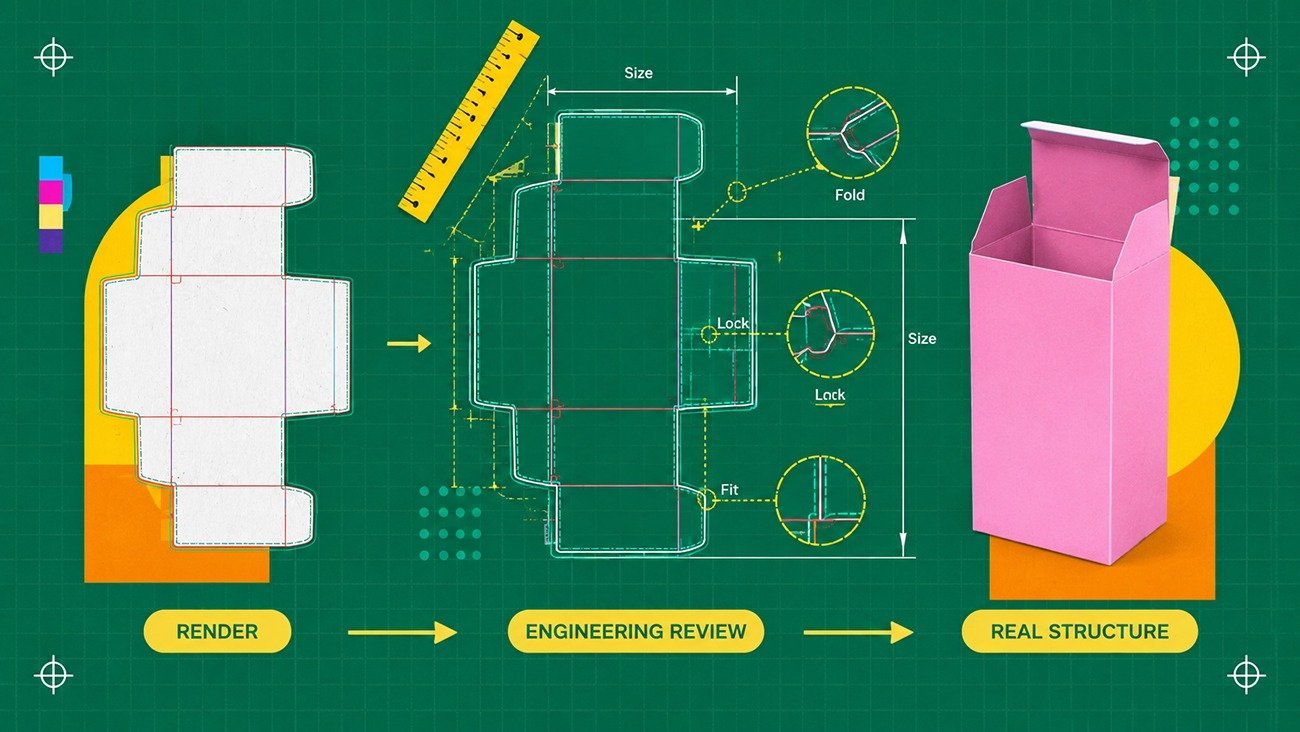
The Core Value of Engineering Reviews for Custom Packaging Renderings
Professional packaging engineering reviews do not stifle aesthetic appeal; rather, they optimize designs while preserving the brand's visual impact, ensuring the packaging is beautiful, functional, compliant, and cost-effective.
1. Manufacturing Feasibility Verification
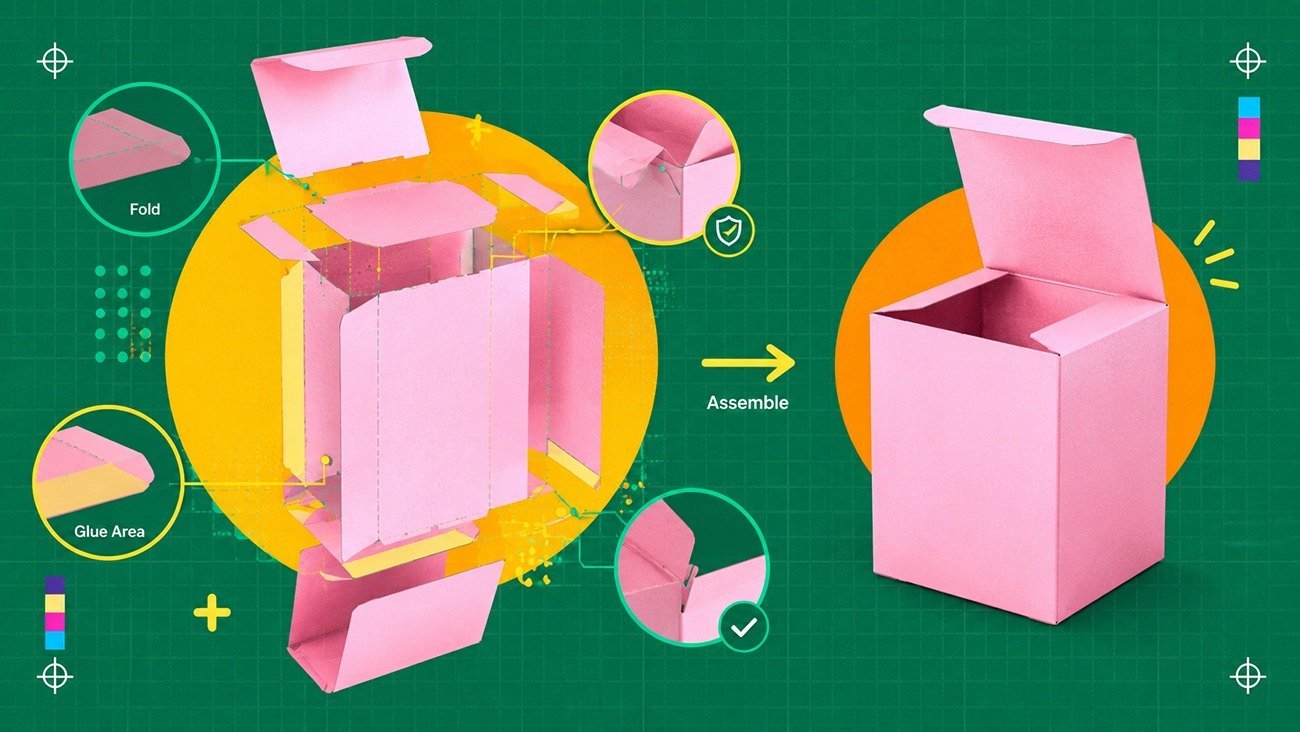
Engineers verify specifications such as paper thickness compatibility, the feasibility of foil stamping and embossing, die-cutting precision, and the logic of fold lines. Impractical design elements are replaced with equally premium alternatives to ensure the final mass-produced product faithfully reproduces the original design.
2. Structural Engineering Optimization
Carton structures and internal paper supports are optimized based on product dimensions, load-bearing requirements, and cross-border logistics scenarios. This enhances the packaging's resistance to compression and drops, resolving issues where aesthetically pleasing designs were too fragile, thereby reducing product damage rates.
3. Export Compliance Pre-screening
Engineers review packaging material composition, surface treatments, and accessory specifications against EU and international export standards. Non-compliant designs are identified early to ensure adherence to cross-border sales regulations, including PPWR, EPR, and environmental standards.
4. Cost and Lead Time Control
The engineering team streamlines redundant processes, optimizes material usage, and establishes standardized production workflows. This effectively controls customization costs, shortens prototyping and mass production cycles, and supports both stable delivery for large-volume orders and flexibility for small-batch orders.

Real-World B2B Client Case Study
A European premium gift brand was collaborating with a local manufacturer to create custom luxury rigid boxes for a holiday limited-edition product.
The initial design rendering featured ultra-thin borders and a multi-layer composite structure, offering exceptional visual appeal. However, after only a cursory assessment by the previous supplier, the project proceeded directly to the prototyping stage without a proper engineering review.
The initial samples suffered from severe edge warping, unstable box formation, and composite structures that failed to meet EU recyclability standards—rendering them unable to pass export customs inspections. Ultimately, the brand chose to partner with Crown Win Packaging.
Our engineering team conducted a comprehensive review of the original design: we optimized the border structure, replaced non-compliant composite materials with a single, recyclable paper type, and adjusted the die-cutting and folding processes—all while preserving the design's premium visual impact. Following these modifications, the packaging successfully passed EU compliance checks and sustained zero damage during logistics and shipping. The brand avoided massive losses from rework and achieved on-time delivery, ensuring that seasonal limited-edition orders were delivered as scheduled.
Crown Win Packaging Capabilities: Professional Engineering Review for Custom Packaging
As a specialized factory for custom paper packaging serving export markets, Crown Win Packaging makes "engineering review" a standard procedure for all custom orders. We are dedicated to addressing key pain points for B2B buyers—such as design failures, rework costs, compliance risks, and delivery delays—through the following measures:
1. End-to-End Involvement by a Professional Engineering Team
Staffed by senior structural packaging engineers and technical specialists, our team engages with projects as early as the design rendering stage. We provide one-on-one optimization advice to prevent unnecessary prototyping and production errors.
2. Rigorous Engineering Reviews for Export Compliance
We are well-versed in EU regulations (such as PPWR and EPR) and international environmental standards for packaging. We conduct pre-production compliance reviews for all export orders to ensure smooth customs clearance.
3. Balancing Aesthetics, Quality, and Cost
We optimize manufacturing processes and structural designs while preserving the brand's visual intent and controlling procurement costs. We support flexible customization—including low minimum order quantities (MOQs)—as well as stable, high-volume production.
4. Strict Quality Control and Delivery Assurance
We implement end-to-end quality management—from rendering reviews and sample approvals to mass production inspections—to eliminate defects and ensure the accurate, on-time delivery of all custom packaging orders.
Conclusion
Exquisite packaging renderings form the foundation of a brand's packaging upgrade, but professional engineering review is the core guarantee for successfully realizing the design, ensuring export compliance, and maintaining consistent quality. Neglecting engineering review often leads to high rework costs, compliance risks, and delivery delays. Custom packaging requires the seamless integration of design concepts with production engineering logic.
If you have paper packaging renderings that require professional engineering review, contact Crown Win Packaging today. Our engineering team offers free services—including design optimization, process validation, and export compliance assessment—to help bring your packaging vision to life perfectly.