If you have ever ordered customized paper packaging boxes, you must have seen this pattern: the larger the order quantity, the lower the unit price. This is not a casual discount, but rather "economies of scale" at play - a core principle in the packaging manufacturing field that can directly enhance the profitability of your brand.
At Crown Win packaging box manufacturer, we are committed to assisting brands in fully utilizing economies of scale and maximizing value without sacrificing product quality. Next, let's delve into how output growth drives cost-effectiveness and how you can use this principle to create advantages for yourself.
What are economies of scale in the packaging industry?
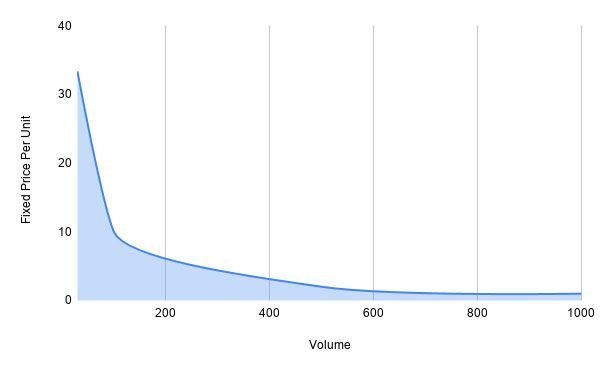
Economies of scale refer to the fact that as the total production volume increases, the unit cost of a product decreases because the originally fixed costs (fixed expenses) are allocated to more product units. In addition, mass production can improve production efficiency, reduce raw material losses, and lower logistics and transportation costs for individual products.
In short, the larger the output, the lower the unit cost.
The operating principle of economies of scale
Let's illustrate with a simple model:
Total fixed cost=$100
Unit variable cost=1 USD
Order quantity: 100 pieces
Unit fixed cost: $100 ÷ 100 pieces=$1
Unit variable cost: 1 USD
Unit total cost: 2 US dollars
Order quantity: 1000 pieces
Unit fixed cost: $100 ÷ 1000 pieces=$0.10
Unit variable cost: 1 USD
Unit total cost: $1.10
Although the total expenditure has increased, the unit cost of the product has significantly decreased. In the actual production process, as the scale expands, the utilization efficiency of variable costs will also improve, bringing you additional cost savings.
Understanding the 'diminishing marginal returns' effect
Economies of scale are not infinitely applicable and have certain limitations. Once the production scale reaches the critical point of "optimal capacity", blindly expanding production will result in minimal unit cost savings. This phenomenon is known in economics as "diminishing marginal returns" (or "diminishing returns").
For example:
Production of 15000 pieces: unit cost of approximately 1.007 US dollars
Production of 20000 pieces: unit cost of approximately $1.005
At this point, the difference between unit prices has become negligible. This means you don't need to over order to save money - just order the appropriate quantity according to your actual needs.
How can your brand benefit from economies of scale
1. Reduce unit costs and increase profit margins
2. Invest the saved funds into high-quality materials, embossing techniques, or customized finishes
3. Stabilize inventory levels and reduce additional costs caused by frequent restocking
4. Consolidate the cooperative relationship with suppliers and strive for more favorable cooperation terms
5. As business grows, synchronously expand packaging scale in a sustainable manner
At Crown Win Box Manufacturer, we assist you in determining the 'optimal order quantity' - the point where cost-effectiveness, warehouse capacity, and cash flow are perfectly balanced.
Conclusion
Economies of scale are not exclusive privileges of large enterprises, but practical tools that every brand can use to control packaging costs. By gaining a deep understanding of how order quantity affects pricing, you can make confident and data-driven decisions that strongly support your product, brand image, and ultimately profitability.
Choose a paper packaging manufacturer that truly understands your needs and always puts your success first as your partner.
Contact us immediately to embark on your customized journey:
WhatsApp:+86 13925505272
Email: maberry@crownwin.com.cn