When designing custom paper packaging, many B2B procurement professionals make the common mistake of confusing visual texture with physical texture. This can lead to unexpected outcomes—such as a printed texture pattern that looks stunning on screen but feels ordinary to the touch, or an intricate embossing process that exceeds the budget without actually enhancing the product's perceived value. For export-oriented brands in the beauty, gift, and wellness sectors, poor texture choices can also cause batch-to-batch inconsistency or even delays in export customs clearance. Understanding the distinction between visual and physical textures helps you strike the right balance between brand aesthetics, production costs, and export requirements.
Visual Texture: A Visual Illusion Created by Printing
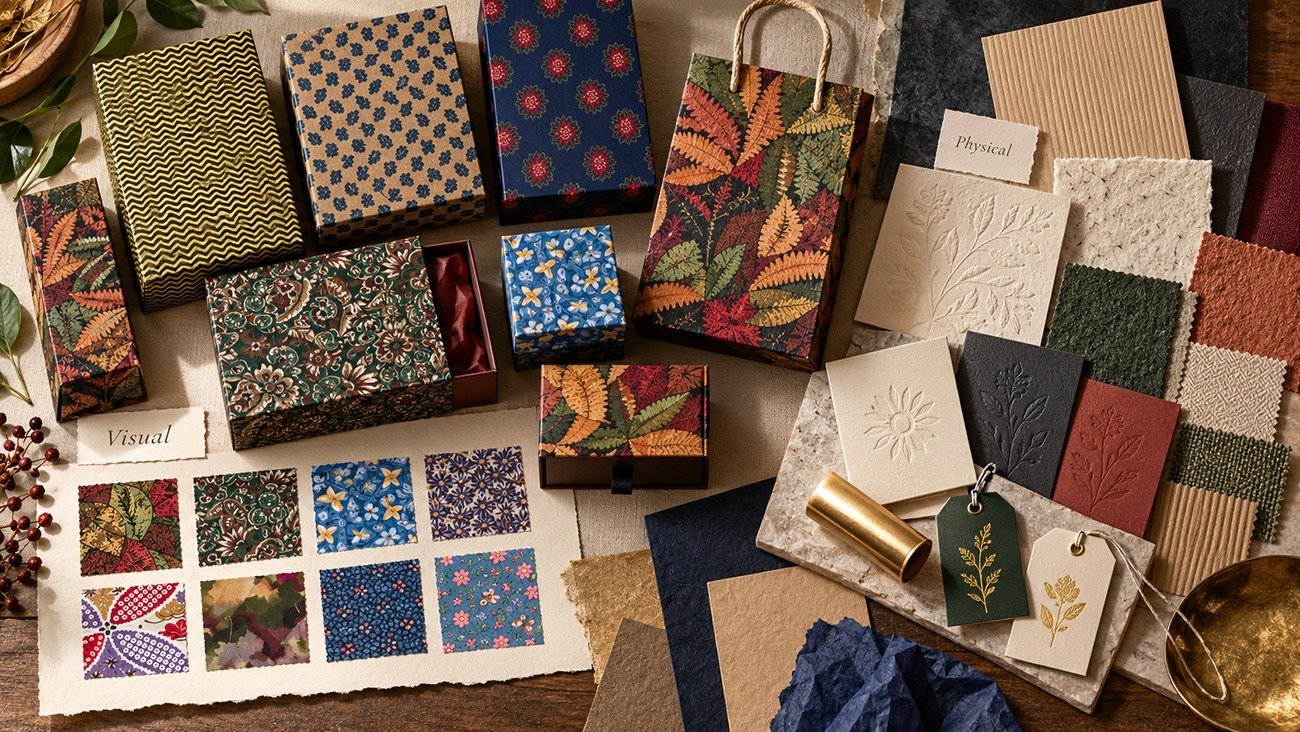
Visual texture is rendered on the paper surface solely through printing, ink, or digital patterns; the surface itself remains flat, without raised or recessed areas. It utilizes designs such as graphic patterns, textured printing, or simulated leather and marble veining to mimic tactile effects.
Pros: Lower cost, faster production, flexible design adjustments, and suitability for small-batch orders. It is an ideal choice for extensive product lines aiming for a premium look without incurring high surface-finishing costs.
Cons: Lacks authentic tactile feel. Heavy ink layers may raise concerns regarding compliance with EU packaging regulations. Susceptible to scratching during international shipping.
Best For: Seasonal limited editions, promotional gift boxes, and "affordable luxury" product lines.
Physical Texture: Authentic, Tangible Texture
Physical texture alters the actual surface profile of custom paper packaging through material selection or surface finishing techniques. Common techniques include textured specialty paper, embossing (raised relief), debossing (sunken relief), flocking, and raised UV (spot gloss relief). When touching the packaging, consumers can physically feel the edges, textures, or indentations.
Advantages: Significantly elevates the brand's premium image, creates a lasting tactile experience, and is resistant to visible scratches. It creates a unique unboxing experience for gift boxes.
Disadvantages: Higher costs for materials and tooling (plates/dies), longer production lead times, and strict quality control requirements to ensure texture consistency across batches.
Best Use Cases: Core luxury product lines, high-value skincare sets, and premium retail packaging for cross-border sales.
How Brands Should Choose
1. Budget and MOQ: Visual textures are ideal for brands wishing to test new packaging with lower minimum order quantities, whereas physical textures often entail higher costs for molds and printing plates.
2. Focus on Unboxing Experience: If your brand prioritizes unboxing videos and the customer's tactile experience, physical texture techniques deliver a stronger sensory impact.
3. Export and Logistics: Consider the risk of wear and tear during transit. Certain heavy physical textures may sustain damage during long-distance sea freight, whereas printed visual textures remain more stable during shipping.
4. Sustainability Compliance: Check material certifications (e.g., FSC). Regarding EU PPWR (Packaging and Packaging Waste Regulation) requirements, certain specialty textured papers may face limitations as eco-friendly options.
Brand Advantage
Partnering with a packaging manufacturer experienced in both types of texture techniques eliminates trial-and-error issues. Crown Win’s expert team will comprehensively evaluate your target market, budget, and shipping requirements to recommend the most suitable paper and technique solutions. Before mass production, we provide samples showcasing both visual and tactile textures for your review and implement rigorous quality control across production batches. We accommodate flexible, small-batch orders, ensure stable lead times for global exports, and offer FSC-certified paper options that meet European market compliance standards.
Conclusion
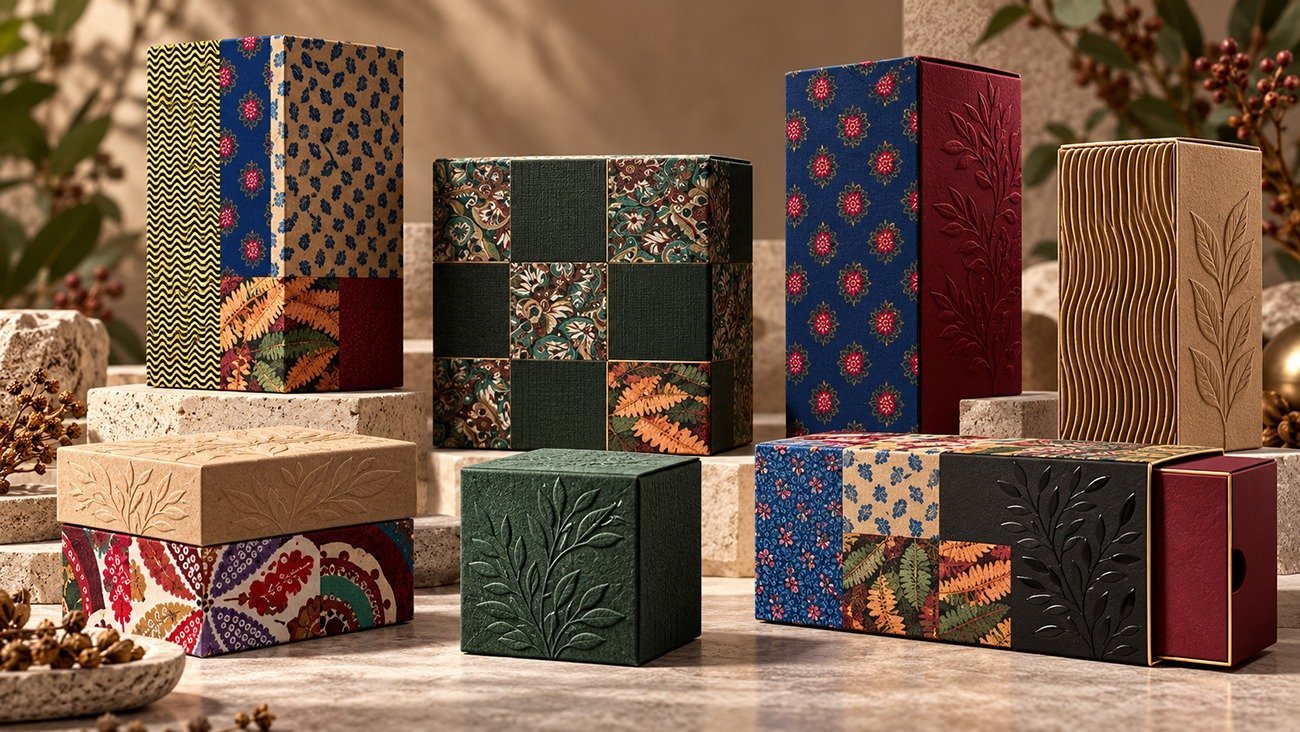
Texture plays a pivotal role in a brand's packaging narrative. Visual textures offer a cost-effective and versatile solution, while tactile textures elevate the premium unboxing experience. Many brands combine the two to strike a balance between aesthetics and cost.
You may also wish to read our guide, "Custom Packaging Inserts for Multi-Product Sets," to further refine your packaging design.
Contact our team today to request texture samples and discuss custom paper packaging projects for global retail or e-commerce markets.